
View all notes
Available query params: commented=1, untagged=1
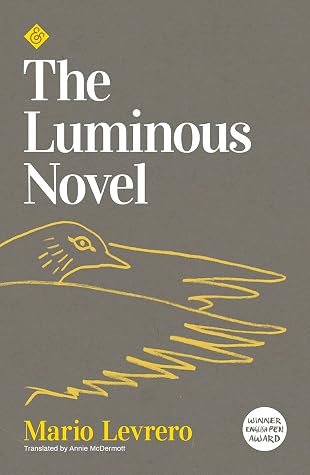
In the dream, her eyes seemed to accuse me of something; to pierce me, burn me, destroy me. But her gaze was still there, in spite of those tricks from the censors; the censors who must have woken me up, calling desperately on the resources of my clumsy waking state to put a stop to things. But her gaze was still there. There was nothing accusatory, or piercing, or burning, or destructive about it. There was only love, love that I wasn’t ready to accept. Love, what’s more, that wasn’t necessarily aimed at me, although I was part of what she loved – which was probably everything in the world, because her capacity to love hadn’t yet been destroyed. Until that moment I’d never seen love in anyone’s eyes. Not even in films. They weren’t the shining eyes of a girl in love, but a docile loving gaze. And the gaze was still there. And it was still there. And it is still there. And it’s still here now, I promise you it’s still living inside me, you glorious girl; it doesn’t matter that I never saw you again, it doesn’t matter if you’ve become a plump woman laden with children and your gaze has turned bovine. That girl is alive, I promise you, and she always will be, because there’s a dimension of reality in which these things don’t die; they don’t die because they’ve never been born and nobody owns them and they’re not subject to time and space. Love, the spirit, is an eternal breeze, fluttering down the empty tubes that we are. It’s not your photograph I carry in my soul, featureless girl; it’s your gaze, the very thing that was never yours, that was never you.
As I smoked that cigarette and waited for my pulse to slow down, I didn’t know – I couldn’t know – everything that was at stake at that moment. Had I known, I would probably have found the strength to repress, to suppress, the image of those eyes once and for all. Because at that moment the end of my marriage was secretly being decreed, along with my forthcoming marginalisation – to the very edge of society – and what many, including me, see as ‘my madness’. Strangely enough, until that moment it hadn’t occurred to anyone to say, or presumably to think, that I was mad. And yet I was absolutely out of my tree. My consciousness was narrower than the head of a pin. No one applauded when I ended my marriage, quit my job and began spending my time drifting around and doing ‘strange things’ – but I’m getting it wrong again: there was a rambunctious and brutally frank Galician man who congratulated me heartily, roaring with laughter, when he heard about my divorce; and I have him to thank for what little oxygen I was able to breathe during that long and difficult time. On the faces of everyone else I knew, both family and friends, was written blame, suspicion or pity, or a combination of all three.
All this was decided imperceptibly while I was remembering the dream gaze and the real gaze, which were one and the same, and smoking a cigarette, and accepting that gaze. By the time I turned off the light to go back to sleep, I’d surrendered to it entirely. It extended over my whole being, opening up ever more avenues of sensitivity, preparing me for a new destiny. Afterwards, I did the right things. I didn’t look for the girl; in fact, I forgot all about her for a while, and even when I did remember her, it never occurred to me to go looking for her. Certainly not. I did all the right things. I had to destroy everything I’d been, thought, believed and felt. I had to get rid of every trace of that delirious life I’d been dragging along like a clumsy worm behind me for the past twenty-five years. I didn’t do it consciously, deliberately; I should have done. Accustomed as I was to my narrow consciousness, I carried on within its limits; but that gaze had injected me with the dimension of love, which everyone knows works of its own accord. My narrow consciousness fought back against the dimension of love; it shouldn’t have done. The battle was lost – or rather won – because God didn’t allow that dream to go unnoticed. stop right there! do you expect us to believe you’re going to tell us about luminous, mystical, spiritual experiences, when you’ve talked about nothing but women, destruction, alcohol and prostitutes? all that’s missing is drugs! go on, minions, take this miserable wretch and throw him into the most pestilent dungeon! Little old ladies in dark-green shawls are whacking me on the head with their umbrellas. You can hear the beating of a drum. A multitude of mothers with their children in their arms, their eyes full of tears, silently mouth the letters of a curse. The pyre is ready. While my body burns in resignation, I think: ‘They weren’t patient enough, they weren’t curious enough. If only they’d carried on reading … ’ And I raise my eyes to the heavens, wanting to exclaim piously: ‘Forgive them, oh Lord, for they know not what they do,’ but a final flicker of consciousness makes me shout instead: ‘The bastards! The fucking bastards!’
Young people, listen closely: there’s nothing good about alcohol, cigarettes, prostitutes, pornography or drugs. They destroy you, body and mind. Don’t think for a second they could be tools of liberation: on the contrary, they lead to dependency and alienation, they ruin you and, in the end, they kill you. My only tool of liberation was that loving gaze God sent me in the eyes of a woman; the rest of the story was nothing but one long mismatching of my means and my ends: ignorance; solitude; lack of support and affection; an enormous world which that gaze released within me and which I didn’t know how to control. I had to destroy myself because I didn’t know about the tools I could use to build myself up. It’s not a fail-safe method. Don’t try to follow in my footsteps. Besides, it was only one liberation, nothing definitive.
Only your soul, young man, can show you the way. Wind it up, set it in motion, and let it be whatever God wants. The sublime, that dimension we never consider, that thing we’re missing: it’s nowhere and it might be anywhere; here today, there tomorrow, gone completely the day after, and in twenty years it’ll be back again, or perhaps it won’t; it all depends on the Grace of God – and how you’re getting on with yourself. Once, perhaps by chance, Grace brushed against me in a church. I was thirty-six years old, and that experience, which I’ll write about in due course, made me take Communion for the first time. Not even churches are off limits to the hand of God.
the last line kills me
I’m not sure if you can tell, but I’ve breathed life into a deranged monster that’s now pursuing me relentlessly. Of course, of course there was a reason why I resisted and prevaricated so much before writing the first lines of this novel. The most ridiculous episodes of my life are all flooding into my head and they won’t leave me alone; I can hardly eat or sleep, I wake up very late and go to bed when the sun’s already risen; yesterday I saw serious signs that more biliary colic is on the way; and since even before starting to write, I’ve been in a constant flu-like state, which is obviously false: an excuse to waste all my time writing. I live for the novel; I think about it all the time; I write up neat versions of the drafts, making additions and cuts, and I think and think and think and think. My life has turned into a speech, an uninterrupted monologue completely beyond my control. I’m in thrall to the delirium, the search for catharsis, the demands of the work I must do, whether I like it or not, with the single vague hope of one day reaching a full stop and finding myself empty, exhausted, cleaned out – and ready for another. Because the point is that none of the luminous experiences and none of the liberating experiences have served to make me say ‘Enough now’, ‘I’ve made it’, ‘That was the one’. What’s more, although there was a time when I tried – and oh, how I tried – to reach something that would allow me to say ‘Enough’, ‘I’ve made it’, I’m now very aware that we only get to this point when we die, and I recoil from that even more than from the very demon itself. Readers, do not be deceived: I have no great wisdom to pass on, and I hope I never acquire any. The name of wisdom is: arteriosclerosis.
First sighting: tall, proud, shapely, with very black hair and a white dress; suave, elegant, warm and educated. Accompanied by a tall, proud, athletic, elegant and educated man. They came into the place where I worked, in the period following the episode with the green-eyed girl – the period of films, books, alcohol and prostitutes. We talked for a while, and after they left, my business partner and I fell silent, looking at the place where she’d stood. My business partner was having a mild attack of asthma. As the minutes went by, the invisible pedestal holding her aloft grew higher and higher without us noticing. After a while, my business partner and I dared to exchange a glance. Then we looked up and down but with our chins tilted a little to the right, somewhere between nodding and shaking our heads, our lower lips pushed slightly forward to simulate disappointment. What a shame, we were trying to say to each other, that a woman like that could never be ours. In the days that followed, we began to reminisce about her out loud. My business partner, who was very observant, or had an overactive imagination, always added some new detail I’d overlooked or forgotten: the tasteful patterning on her embossed belt, how well the strip of white wool peeping over the top of her dainty leather boots suited her, or the lock of jet-black hair nestling behind her left ear. And after a few more days we’d forgotten her, at least to a certain extent.
How can we say whether anything’s good or bad for us? Are we capable of judging an ordinary event, sure of not being mistaken? [...]
To return to the story of G: we’d got as far as me raising the shutters of the shop each day at 9 a.m. Well, early one morning, the goddess reappeared in the shop. I was by myself; my business partner used to come in the afternoons. She reappeared, strangely enough, at a height altogether more appropriate to my own, having swapped the heels she’d been wearing to match the athlete for others that were very much within reach of my five foot nine and three quarter inches. And what’s more: she was no longer addressing me formally. And what’s more: she asked me to get hold of some books for her, and gave me her phone number. And what’s more – know, reader, that tears are stinging my eyes as I write this. And what’s more: before she left, she told me she had separated from her husband.
What is there in these tears? I don’t know. Perhaps pain, shame, self-pity, humiliation, longing. I don’t know, I don’t know. Please excuse me, reader; for years now I’ve been waiting in vain for some tears. Leave me by myself for a few moments, and then I’ll carry on with the story.
I’ll carry on, saying that my tears were all those things combined, and something else – the memory of having been very happy for a few hours, enormously happy, deliriously happy. They also reveal the chasm stretching between that age and the age I am now; I had mornings, I had work, salaries were high enough that people could buy a thing or two; I could have croissants and café con leche for breakfast, not only because of my purchasing power but also because of the digestive power I enjoyed back then. But what I feel most wistful about, believe it or not, is my ignorance of how the world works – because then (although only then and not before) I was about to begin finding out. Do I know everything now? No; now I only know that it’s not worth knowing – ‘how the world works’, that is. You have to know something so you don’t go under, so you can haul yourself more easily through the mud, so people don’t necessarily always get the better of you in everything; but what I mean is that knowledge doesn’t bring you any closer to what you need in order to make your life better, or even to make you feel better. Does anyone know what I’m talking about? Never mind. I know what I mean.
I got hold of the books she’d asked for – almost immediately, of course. I telephoned her. She came. And it was all so easy that … She hung around chatting until closing time. I lowered the shutters and we talked some more, and all along I was thinking: ‘She’s going to leave now’, ‘She’ll leave any second’, ‘Why isn’t she leaving?’, ‘Surely she’s going to leave’. I didn’t know how to get rid of her. I asked if she wanted to go for a walk and she said she did. We walked. We walked some more. ‘Now she’s going to get on a bus. Surely now she’ll leave. She has to leave. Why isn’t she leaving?’ I realise the reader will be wondering what kind of an idiot I am. Well, you’d be wondering a lot more than that, I can assure you, and in a lot more detail, too, if you’d seen those firm legs encased in black fishnet stockings, which were so generously displayed when she sat down in the bookshop; if you’d seen the look in her eye, if you’d felt her air of docile availability. Yes, reader; you have the right to think as you do. I thought that way myself, and sometimes I still do, especially when I wake up with liver trouble. But at the time, all I wanted was to be rid of her, was for her to leave.