
by
Dave Eggers
View all notes
Available query params: commented=1, untagged=1

Delaney could see the building, no more than a hundred yards away; its façade bore the word HEREME in four-foot letters. Kiki was looking at her screen.
“Oh no,” she said. “It’s telling us to get on the highway. That couldn’t be right. Just let me …” She tapped away for a few moments as Delaney tried, gently—for she felt anything could send Kiki over the edge—to tell her that the building was in front of them. Finally, as Kiki waited for her screen to refresh, Delaney managed to lead Kiki’s eyes to rest on the HereMe sign.
“Okay,” Kiki said, “but I want to be sure.” And again she waited for her screen to confirm what was before her.
“I can make it from here,” Delaney said, and Kiki gave her an exhausted, grateful, half-mad look, and then tapped her earpiece, through which a new call had arrived.
mildly funny
So she needed Idaho. She needed to sit by the river and think. She put in a request for time off, and in the meantime she requested a low-pressure rotation, citing the emotional drain of HereMe. She was placed in New World Order, where the team of six was tasked with ranking all that could be ranked, which was everything. That week was M-themed, so she ranked the world’s best mammals, mothers, monarchs, magicians, mail carriers, Malawians, Malaysians, mannerisms, maps, masseuses, and Marxists. They ranked mathematicians, MBA programs, medicines, measurements (No. 1 = millimeter), Mercurys (Freddie first, then the element), midwives, meteorologists, middleweights, mimes (Marceau 1, Melania 2), Misters (Rogers 1, Mister 2), mountains, mutineers, and muffins.
again mildly funny
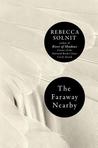
What's your story? It's all in the telling. Stories are compases and architecture; we navigate by them, we build our sanctuaries and our prisons out of them, and to be without a story is to be lost in the vastness of a world that spreads in all directions like arctic tundra or sea ice. [...]
[...] Scheherazade, like a working-class hero, seized control of the means of production and talked her way out.
just thought this was funny. referring to Scheherazade from 1001 nights
[...] Fairy tales are children's stories not in who they were made for but in their focus on the early stages of life, when others have power over you and you have power over no one.
I used to go to Ocean Beach, the long strip of sand facing the churning Pacific at the end of my own city, for reinforcement, and it always put things in perspective, a term that can be literal too. The city turned into sand and the sand into surf and the surf into ocean and just to know that the ocean went on for many thousands of miles was to know that there was an outer border to my own story, and even to human stories, and that something else picked up beyond. It was the familiar edge of the unknown, forever licking at the shore.
beautiful
When you say "mother" or "father" you describe three different phenomena. There is the giant who made you and loomed over your early years; there is whatever more human-scale version might have been possible to perceive later and maybe even befriend; and there is the internalized version of the parent with whom you struggle--to appease, to escape, to be yourself, to understand and be understood by--and they make up a chaotic and contradictory trinity. [...]
Like many others who turned into writers, I disappeared into books when I was very young, disappeared into them like someone running into the woods. What surprised and still surprises me is that there was another side to the forest of stories and the solitude, that I came out that other side and met people there. Writers are solitaries by vocation and necessity. I sometimes think the test is not so much talent, which is not as rare as people think, but purpose or vocation, which manifests in part as the ability to endure a lot of solitude and keep working. Before writers are writers they are readers, living in books, through books, in the lives of others that are also the heads of others, in that act that is so intimate and yet so alone.
Writing is saying to no one and to everyone the things it is not possible to say to someone. Or rather writing is saying to the no one who may eventually be the reader those things one has no someone to whom to say them. Matters that are so subtle, so personal, so obscure, that I ordinarily can't imagine saying them to people to whom I'm closest. Every once in a while I try to say them aloud and find that what turns to mush in my mouth or falls short of their ears can be written down for total strangers. Said to total strangers in the silence of writing that is recuperated and heard in the solitude of reading. Is it the shared solitude of writing, is it that separately we all reside in a place deeper than society, even the society of two? Is it that the tongue fails where the fingers succeed, in telling truths so lengthy and nuanced that they are almost impossible aloud?
[...] I wish that I could put up yesterday's evening sky for all posterity, could preserve a night of love, the sound of a mountain stream, a realization as it sets my mind afire, a dance, a day of harmony, ten thousand glorious days of clouds that will instead vanish and never be seen again, line them up in jars where they might be admired in the interim and tasted again as needed. My historian's nature regards with dismay that all these things arise and perish, though there will always be more clouds and more days, if not for me or for you. Photographs preserve a little of this, and I've kept tens of thousands of e-mails and letters, but there is no going back.
original topic: preserving apricots