
View all notes
Available query params: commented=1, untagged=1

What happened next didn’t feel like liberation so much as demolition. After midnight, I started texting with a sweet, respectful software engineer I’d seen a few times before, aboveboard, within the parameters of Aaron’s and my rules. Eventually it became clear that I was, at that moment, again going to break those rules. I slipped out wearing nothing but a sundress to go meet the guy while Aaron was dead to the world. When I walked through my own door at four a.m., knees buckling and hair a mess, there was a large part of me that wished Aaron would wake up and demand to know where I’d been—not just because the despair was starting to creep back and an angry confrontation would have been more satisfying than nothingness, but because I knew it was over, and I wanted him to do the honors.
He didn’t. I don’t want this, I thought: not this relationship, not an affair, not a life devoid of the erotic. A few weeks later, I moved out.
I thought back to the best sex I’d had in recent memory: the topaz pellet, my sweaty face on Rob’s couch, limbs tied up, lava lake of desire completely exposed. I was so disarmed, so trusting. That wasn’t the kind of sex you had with a one-night stand. Despite our best efforts, Rob and I had failed to keep it “casual,” and that was with our respective partners acting as emotional buffers. The high stakes of seeing Rob had also heightened the hotness. It wasn’t just sex but forbidden sex—a classic trope, of course, a source of eroticism that depended on dishonesty and the risk of negative consequences. That kind of thrill felt both inaccessible and antithetical to a slut with integrity. I wanted my hookups to be both fulfilling and morally sound.
Almost right away, I was confronted with a dilemma that has long complicated the success rate of casual sex, even between two upstanding humans. How could I have satisfying sex while feeling safe but not bored, cared for but not smothered in sentimentality? How could I stay true to my feelings but not be “too much”?
Facetious critiques of the theory and its resulting law expressed concern that enthusiastic consent would make sex artificial and sterile, requiring awkward checklists. Others gave the false impression that fishing for one “yes” and moving on was good enough, rather than interpreting consent as a fluid, ongoing process. Friedman would later clarify that enthusiastic consent is a more active process than just following rules or waiting for a green light; it’s “a humanizing ethic of sex.” Truly internalizing the values of consent, she wrote, must include “emotional literacy”—the ability to be vulnerable, and to be trusted with others’ vulnerability.
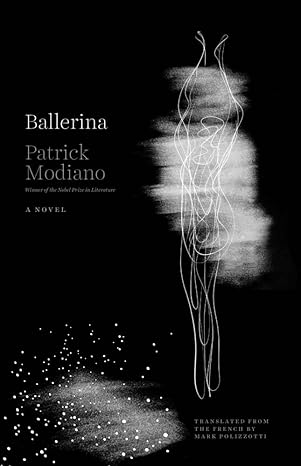
[...] Dance, Kniaseff used to say, is a discipline that enables you to survive. One evening, he was sitting with her at the bar in Studio Wacker, in the muted light. They were alone, class having ended long before. He told her that this discipline gives real meaning to life and keeps you from drifting. He himself … She was amazed that he should confide in her, he who was normally so reserved, observing a kind of military rigidity. Do you know why the Russians have excelled in this discipline better than anyone? Because many of them have had to struggle against their internal chaos, their violence, and the melancholy that comes over them periodically. And he burst out laughing, as she listened to him with mouth agape. “You are my favorite pupil, and you mustn’t be afraid of suffering and bleeding into your dance slippers. You understand?” It was the first time he’d really spoken to her. During the lessons, she had so little self-confidence that she never would have imagined him paying any particular attention to her. It’s true that she often found herself with dancers who were older than she, more seasoned. And that evening, he had told her she was his “favorite pupil.” And he had even added, alluding to one of his former students: “If you keep it up, you’ll be as good as Chauviré …”
That was the most uncertain period of my life. I was nothing. Day after day, it felt like I was drifting in the streets and that there was no difference between me and those sidewalks, those lights, to the point of becoming invisible. And yet I had the example of someone who practiced a difficult art—“very, very difficult,” as Kniaseff repeated in his Russian accent, an accent so light that it sounded British or Viennese. And I do believe that the example the ballerina set, without my fully realizing it, incited me to gradually change my behavior and shed the uncertainty and nothingness that filled me.
Then he got up, leaving me alone with them, and went to join two men sitting in the armchairs near the bar. I have only a disjointed memory of that evening, as if it had unfolded on a staccato rhythm, faster and faster. Who was the man at the table with the ballerina that evening? It could not have been Hovine, whom I met later, or Jean-Pierre Bonnefoux, who studied with her under Kniaseff at Studio Wacker. We exit the restaurant, and the man with her, whose face has been erased forever, leaves us on the sidewalk. I am alone with her. She tells me she needs to walk and that her building isn’t far away. I offer to accompany her.
We follow Boulevard Pereire, then Avenue de Villiers. The air is warm, almost like in summer, and yet I seem to recall it was in the month of November. And I’m certain that the trees hadn’t yet shed their leaves.
<3
At first, I had a hard time keeping up with her, but eventually I got used to her pace. And little by little the feeling of emptiness, of profound stagnation that took hold of me at certain times of day, melted away. It was if she was pulling me along and helping me rise to the surface.
She gave out these details in spurts, in no particular order, as if there were gaps in her memory. For instance, she didn’t say a word about her parents, or about many other things. I sensed it was pointless to ask. She wouldn’t answer. The past seemed so distant to her that all she had left was free-floating debris. Now she told me about the Balanchine ballet La Sonnambula, which she’d been rehearsing for the past two weeks for Félix Blaska’s company. In short, her former life no longer interested her and she had sloughed it off like dead skin. Thanks to dance. Kniaseff was right to say that dance is a discipline that enables you to survive.
And he suddenly burst out laughing. He gazed after her as she walked up the street toward the Grands Boulevards. She walked on the patches of snow and black ice, light on her feet—like a dancer, he thought; anyone else would have skidded and fallen heavily. What a strange girl … She hadn’t changed since she was a child, when he had known her with her father, and much later with the father of little Pierre.
Most of the time, during our walks throughout Paris or on bus rides, we didn’t speak. The silence between us was a much stronger bond than words. We were like those people who walk side by side, never saying a thing but always taking the long way around.