
by
n+1
View all notes
Available query params: commented=1, untagged=1

This is the diamond of the mind, this ability. A lot of people know about it, but I didn’t know about it.
From then on when the panic crept in I could just push over the thread-thin edge to the other side, feeling the way to joy.
Joy is the knowledge that the thread is there.
A thread runs through the middle of your life, and if you find it, the second half can be comedy instead.
A place can make you want to die and then you can turn it over into the sweetest thing. You can do this yourself, if you have found the diamond in your mind.
I am less interested in zombie stories, though, than I am in this neighborhood’s particular light. The thing I most want to tell you is how the sunlight is here, but I don’t know how to describe it. It’s obviously the same sun that lights the rest of the city, but there is something different about it. Maybe it’s our lack of trees, or the reflection of the river, or the lowness of most of the buildings, or the supersaturated colors, deep reds and greens, the bright wild complicated graffiti. We don’t have the trees of South Brooklyn, the shady corridors of stoops, the tall stately brownstones of Fort Greene or Park Slope. We don’t have cobblestone streets. What we have is this naked golden light. It’s a thin, big-sky light, kind of Western, cinematic. Since the first day I saw it, it has alternately flustered and comforted me. Today its particular quality will have half the people in the neighborhood drinking in the afternoon. By five or six, some of the couples will already be fighting on the streets, one of them wrangling the drunker, more belligerent one home, because there is always a drunker, more belligerent one, and one who needs to feel like he or she is taking care of someone.
At the moment, though, a really tall guy on roller skates is coasting down the long steep slope of the pedestrian walkway with his legs and arms spread wide and the wind in his fingers. He has the biggest satisfied grin on his face. There are always a few people a day who roll like this, on bikes or boards or even just running, arms wide, falling down the bridge into Williamsburg, in the pretty light.
It is important to know that there are things that end. Things you can’t change with your mind or even your body or even chemicals. As spring draws near, the building wins the lawsuit. We’re getting evicted, the tenants who have lived here for ten or twenty years, and the subletters like me hiding out in these labyrinthine halls. “The last of the starving artists who colonized Williamsburg two decades ago and began its transformation into the hipster capital of New York could soon find themselves out on the street,” begins the article about it in the Post. It’s headlined, nonsensically, “W’burg has art attack: Hipsters facing boot.” There’s no chance of an appeal. My neighbor makes a banner to hang on the front of the building: ten homes lost! She’s been here since 1994, like most of the residents of the ten lofts. It’s not a machine or a dream or a crypt for her, just her home, made impossible by money. Police cars come, sirens wailing, to remove the banner. There will be condos.
This is one way to quit: wait until the bitter end, when you have done all you can to make the time machine keep working. You have learned its inner systems, improvised workarounds, carted in the water yourself, but it becomes harder to keep it alive than leave it. What they call hitting rock bottom. The final tragic reversal may be slow, boring, and horrible. The time machine has turned into a crypt, but it is not a crypt if you go inside with the body. If you must raise it from the dead again, know the power it has is your own: bend over it like a vampire, fire it up like Dr. Frankenstein. When you are able to stop, there will be a moment when you have to just walk out of the building. It’s not that living will be the opposite of addiction now; there can be more life because you know how to stretch out time, more joy because you have practiced the art of reanimation. You are a professor of transformation; you just need new tools. There is no outside or inside to it, no opposition, no right way to go, just this new way of seeing.
Perhaps the patients Freud called narcissists were people so lacking in empathy and capacity for love, so fraudulent and immature, that today they would be diagnosed with NPD. But one wonders whether any women and too-feminine men might have resisted making the mistakes transference demands—falling in love with the analyst, projecting their father-attachments onto him—for some other reason. From the perspective of Freud’s emerging “science,” if they didn’t need therapy, their self-sufficiency must be a case of arrested development; if their sexuality was not visible as healthy from the perspective of the analyst’s theories, they were immature. It’s not something Freud considers, the possibility that such resistance might actually have been exactly what it looks like: an aversion to the analytic situation, with its imbalance of power, its detached and disinterested analyst, its required performances of colossal mistakes, its falseness and its theatrical repetition of the past, and that such resistance might make some sense, in a room where the patient’s sexuality or gender is treated as something to overcome.
On the question of prevalence, this first DSM entry was cagey: “This disorder appears to be more common recently than in the past, but this may be due only to more professional interest in it.” But behind that neat list of narcissistic traits, within psychology’s ever-expanding and dividing fields and schools, the debates continued: How much self-regard is normal, and how much unhealthy or even evil? When someone is acting like a six-year-old, should you empathize with their view of reality or try to correct it? If someone doesn’t want to talk to you or fall in love with you, when is that because he is fundamentally an asshole? If someone turns suddenly away from treatment, or from a relationship, does that mean she is incapable of love? Are there really people who have no empathy? Can you help someone learn to love? And is this thing called narcissism something some people are, or something they do? These are questions you can ask forever, not only if you are a psychologist, but if you find yourself loving someone who turns away.
It is something you’ll come to months or years later, if at all: the possibility that the way he was with you was real, and that it was love; that the way he was with the other woman, real or imagined, was real, was love, as well. You might understand this in the middle of the next time you fall in love with someone else, and find yourself, still, in love with him. You’ve just spread your love out in time, and he has spread it out in space.
But that is exactly what you can’t get to, the perspective of time, when your gaze is frozen on the image of him turning away. You’re suffering from the same illusion as both Echo and Narcissus: only one person can be the center of another person’s world at any given time, and ideally, this would always be you. This is where all the narcissistic romance websites invite you to be: in the center of the world, stuck in time, assessing the moral status of others, until love is gone.
There’s a sentence of Alice Miller’s looping in my mind, about grandiose people and depressives, Narcissus and Echo: “Neither can accept the truth that this loss or absence of love has already happened in the past, and that no effort whatsoever can change this fact.” It’s the main thing I’ve learned from reading all this psychology: the future is always trying to feel like the past. When it does, it feels like selfishness, hurt, loss at the hands of others. The trick is to let it empty. Maybe this is another way to come unstuck in time.
For years, whenever he turned away, I filled in the blanks with the script, but now he is here all the time, he won’t leave, and even so close by, his mind—the other’s mind—can turn strange and blank. You can fill in the blank with stories about coldness and stories of evil. You can try to chase it down, rope it, you can make war on it, but it will still be blank. You can rage against your dependency, the absolute need for the other that can never be satiated, but the other is, in their own way and not through their own fault, the very center of their universe, and there is a part of that centrality that will always be empty of you. You can study it and theorize it, but if the blank were not still bottomless, love would not ever go on long.
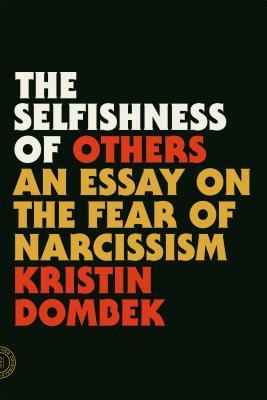
Maybe it’s not something to run from, but one of the best things, the way no matter how hard we try to study them, the selves of others escape capture. It is something to turn toward, the selfishness of others, a kind of gift: the thing that can empty the future of your fears from the past.
The selfishness of others is the feeling of your dependence revealed, as their gaze turns away. Your independence laid bare as myth. The feeling of being the animal you are, born of other animals, made of mirroring them.

I have a garden, or what we call in New York a garden — a cement plot edged with potted plants — and I often think I should go outside to sit at the green plastic table and write and work, in good health, having made myself a glass of iced tea or something. But sometimes I just can’t do it. I make the list, but then I sit on my brown couch and stare for hours, turning something inarticulate over and over in my head, waiting for something that never happens, dehydrating myself, eating nothing good, caught between dread and guilt about not doing the things on the list and the pleasure of not doing the things on the list, while the air gets too heavy to move through, the stillness a little terrifying, if I let it be, like lucid dreaming about paralysis. Recently nearly a whole week passed while I was on the couch, while the sun shone outside and the flowers bloomed absurdly.
That the end is always there in the beginning is, obviously, no comfort. Our strangeness and difference from one another is what makes it feel so expansive and effervescent to learn each others’ bodies and worlds; this is what makes the world shine, and then empties it out, for a while, when the other becomes strange again. It’s true, but it’s also bullshit; some people are able to learn one another again, apologize, forgive, make new. She could have. He could have. You could have. I could say: Next time, ask to meet the husband. But you are not asking what to do next time. You are asking what can be saved, if anything, of the world you made together.
[...] The phrase “try harder” first came to my attention when I was writing an essay for this very magazine. Next to a paragraph that was foundering on the rocks of my typically confused mind, Mark Greif, rather than engaging in any substantial way with the content of that paragraph or giving me any guidance at all about how I might improve it, instead wrote in the margin next to the paragraph in blue ink, try harder.
At first I was puzzled. Try harder at what? Try harder at making sense, I supposed, but how? Maybe Mr. Greif should try harder at editing, I thought. But then, because he had asked, I decided to attempt what he’d suggested. I turned my attention more vigorously to the problem paragraph, and found the place in the mind where you can — motivated by heightened belief and desire — make yourself make more sense, and I sat still and worked until the paragraph got better, and it did. And the fact that he hadn’t told me what to do, but assumed that if I tried harder, I would figure out what to do, was the condition of possibility for being able to do this.
this is both funny and also worth remembering on a more serious note