
by
Andre Dubus
View all notes
Available query params: commented=1, untagged=1
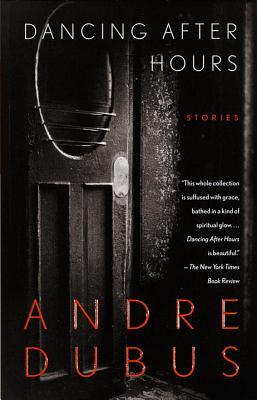
[...] In her last three years she realized she was becoming scornful and bitter, and she worked to control the tone of her voice, and what she said to students, and what she wrote on their papers. She taught without confidence or hope, and felt like a woman standing at a roadside, reading poems aloud into the wind as cars filled with teenagers went speeding by. She was tending bar in summer and finally she asked Jeff if she could work all year. She liked the work, she stopped taking sleeping pills because when she slept no longer mattered, and, with her tips, she earned more money. She did not want to teach again, or work with teenagers, or have to talk to anyone about the books she read. But she knew that pain had defeated her, while other teachers had endured it, or had not felt it as sharply.
Because of pain, she had turned away from Jeff, a man whom she looked forward to seeing at work. She was not afraid of pain; she was tired of it; and sometimes she thought being tired of it was worse than fear, that losing fear meant she had lost hope as well. If this were true, she would not be able to love with her whole heart, for she would not have a whole heart; and only a man who had also lost hope, and who would settle for the crumbs of the feast, would return her love with the crumbs of his soul. For a long time she had not trusted what she felt for a man, and for an even longer time, beginning in high school, she had deeply mistrusted what men felt for her, or believed they felt, or told her they felt. [...]
She wanted equilibrium: she wanted to carry what she had to carry, and to walk with order and strength. She had never been helpless, and she thought of Drew: his throbless penis with a catheter in it, his shit. If he could not feel a woman, did he even know if he was shitting? She believed she could not bear such helplessness, and would prefer death. She thought: I can walk. Feed myself. Shower. Shit in a toilet. Make love. She was neither grateful nor relieved; she was afraid. She had never imagined herself being crippled, and now, standing behind the bar, she felt her spine as part of her that could be broken, the spinal cord severed; saw herself in a wheelchair with a motor, her body attenuating, her face seeming larger; saw a hired woman doing everything for her and to her.
Kirk had said: “Know what I mean?” To love without the limits of seeing; so to love without the limits of the flesh. As Kirk danced through the crowd, he had hugged women and men, not knowing till his hand and arm touched their flesh. When he hugged Emily, she had not felt like a woman in the embrace of a man; she melded; she was music.
“He was laughing the whole time,” Alvin said. “While the chute was pulling them on the ground. He’s on top of the guy, and he’s laughing and shouting: ‘This is great, this is great.’ And on the video you can hear his bones snapping.”
“When did you know?” Jeff said.
“On the third day. When my feet were swollen, and Alvin couldn’t get my shoes on.”
“You never felt pain?” Rita said.
“Not like you do. It was like a pinball machine, this little ball moving around. So in the hospital they sent me a shrink. To see if I had a death wish. If a normal sky dives and breaks some bones, they don’t ask him if he wanted to die. They ask quads. I told him if I wanted to die, I wouldn’t have paid a guy with a parachute. I told him it was better than sex. I told him he should try it.”
Rita said: “How did you get hurt?”
“Diving into a wave.”
“Oh my God,” Emily said. “I love diving into waves.”
“Don’t stop.” He smiled. “You could slip in the shower. I know a guy like me, who fell off his bed. He wasn’t drunk; he was asleep. He doesn’t know how he fell. He woke up on the floor, a quad.”
Alvin asked Rita to dance, and Kay asked Jeff. They pushed tables and chairs and made a space on the floor, and held each other, moving to Desmond’s slow song. Emily said: “When this happened to you, who pulled you out of the water?”
“Two buddies. They rode in on the wave that got me. They looked around and saw me. I was like a big rag doll in the water. I’d go under, I’d come up. Mostly under.”
“Did you know how bad it was?”
“I was drowning. That’s what I was afraid of till they came and got me. Then I was scared because I couldn’t move. They put me on the beach, and then I felt the pain; and I couldn’t move my legs and arms. I was twenty-one years old, and I knew.”
Coltrane softly blew a low note and held it, the drummer tapping cymbals, and the cassette ended. Emily withdrew her hand from Jeff’s back, but he still held hers, and her right hand. He said: “He told me once: ‘I wake up tired.’ His body was his enemy, and when he fought it, he lost. What he had to do was ignore it. That was the will. That was how he was happy.”
“Ignore it?”
“Move beyond it.”
He released her back and lowered her hand, and shifted his grip on it and held it as they walked toward the table; then Jeff stopped her. He said: “He had something else. He was grateful.”
“For what?”
“That he wasn’t blown to pieces. And that he still had his brain.”